
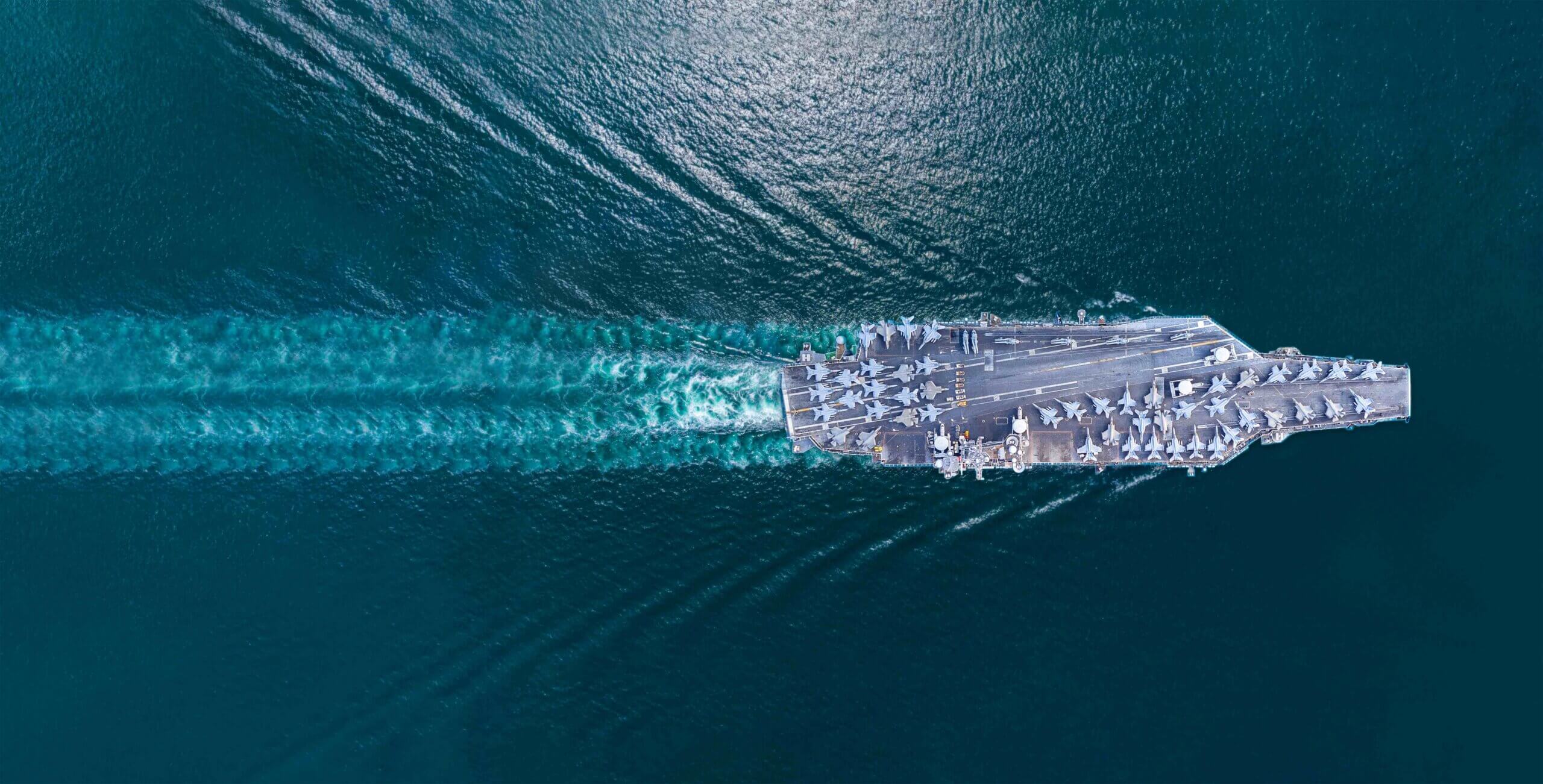
Escalation in hostilities between the United States and Iran has become a material driver of loss volatility for UK and European companies, even where there is no direct operational footprint in the region. The immediate transmission mechanisms are disruption to maritime transit, rapid repricing of war risk, and an expanding set of ‘grey zone’ threats that can impair production, logistics and service delivery without a conventional battlefield footprint.
The Straight of Hormuz
The Strait of Hormuz remains the most consequential single point of failure in this scenario, as it is a critical corridor for global crude oil and LNG movements and a key artery for containerised trade feeding Europe and the UK. Where shipping is delayed, diverted or suspended, the impacts propagate quickly into European manufacturing schedules, inventory availability, project timelines and working-capital requirements. Reports indicate significant traffic disruption and vessel backlogs in and around the Gulf, alongside diversions that materially extend voyage times.
Insurance Market Reaction
Insurance markets typically respond faster than physical supply chains can adapt. London’s Joint War Committee has expanded and amended listed areas across the region for hull war, piracy, terrorism and related perils, including the addition of several territories and the extension of defined sea areas. In practice, this widens the geographic footprint within which underwriters may impose enhanced underwriting scrutiny and where additional premiums are routinely applied for transits.
The most immediate cost pressure is on marine war-related lines: hull war, war risk additions and the downstream knock-on effect to marine cargo pricing and terms. Market reporting in recent days has pointed to sharp increases in Gulf war risk premiums and, in some cases, the withdrawal or cancellation of war risk cover under standard notice provisions. Further commentary indicates meaningful near-term rate increases for marine hull risks operating in the affected theatre. These movements typically flow through into higher freight costs, war surcharges and landed-cost inflation on imported goods.
Rerouting Costs
Where goods transit listed areas, or where carriers re-route to avoid exposure, the total cost of risk increases through a blend of higher insurance costs, longer transit times, elevated charter rates, and increased exposure to delay and contract performance disputes. This is now being discussed openly across maritime markets, including the application of additional war risk premiums on a voyage basis when transiting designated high-risk zones.
Regional Sensitivity
Cyprus-facing exposures deserve explicit attention. Cyprus is structurally sensitive to shipping, energy price volatility and regional trade patterns, and many Cyprus-based entities have operational dependencies on international logistics and imported inputs. Even where insured assets are entirely European, the risk transfer question becomes whether interruption can arise from damage, closure or denial of access affecting upstream suppliers, key ports or regional infrastructure supporting trade flows. Additionally, the presence of UK Sovereign Base Areas on the island introduces a potential geopolitical sensitivity, which may heighten perceived regional risk.
‘Grey Zone’ Risk
The second-order issue is the rise of “grey zone” activity and attribution ambiguity. Grey zone tactics can include sabotage, interference with navigation and communications, covert attacks on infrastructure, and cyber-physical disruption designed to impose cost and uncertainty without a clearly attributable “war” event.
This expands the exposure set beyond vessels at sea to include ports, warehouses, manufacturing sites and critical suppliers’ premises, as well as European assets whose disruption value is high even where physical damage is limited.
Coverage Gaps in Conflict-Driven Scenarios
This is where many corporate insurance programmes carry an avoidable coverage gap. Terrorism cover is frequently purchased on a standalone basis, yet many wordings draw hard distinctions between terrorism, war (including civil war), and broader political violence perils such as insurrection, rebellion, coup, riot/civil commotion, and malicious damage. In a conflict-driven environment, an insured event may be excluded as war or hostilities, may fail to satisfy a terrorism definition, or may present attribution issues that delay or complicate claims resolution. Market commentary continues to highlight buyer migration towards broader political violence cover as threat patterns become more complex.
Board-Level Continuity
Risk managers should ensure that programme intent aligns with actual policy language across property damage, business interruption, contingent exposures (supplier and customer dependency), terrorism and political violence, and that marine cargo and hull arrangements reflect current listed-area designations, notice provisions and additional premium mechanics. Where critical suppliers sit in higher-risk geographies or depend on higher-risk transit routes, contractual resilience and insured resilience should be reviewed in parallel. Uninsured delay costs, uninsured additional expenses and uninsured contractual penalties often dominate the ultimate financial outcome.
W Denis Insurance Brokers’ view is that the near-term market will remain dynamic, characterised by rapid movements in war risk pricing, tightening of terms, and closer scrutiny of aggregation, routing and accumulation across supply chains. Firms that fare best will be those that treat political violence and marine war risk as board-level continuity issues rather than narrow insurance renewal discussions, and that can evidence supply-chain mapping, alternative routing strategies, inventory planning and clear insurance intent supported by disciplined policy wording.
Organisations reviewing their property damage exposures and seeking confidence that claims would be properly structured, evidenced and recoverable under current market conditions should consider engaging with the W Denis team. Please contact Daniel Moss at daniel.moss@wdenis.co.uk or on 0044 (0)113 2439812 or contact Mark Dutton at mark.dutton@wdenis.co.uk or on 0044 (0) 7831 366 469.
Share:




Specialist contact
Mark Dutton
Chief Commercial Officer
T. +44 (0) 7831 366 469
E. mark.dutton@wdenis.co.uk
Arrange a call back